
15 May 2026 · ferretti group
The $1.2 Billion Boardroom War: Will Ferretti Group and its Iconic Yachts Survive the Crossfire?
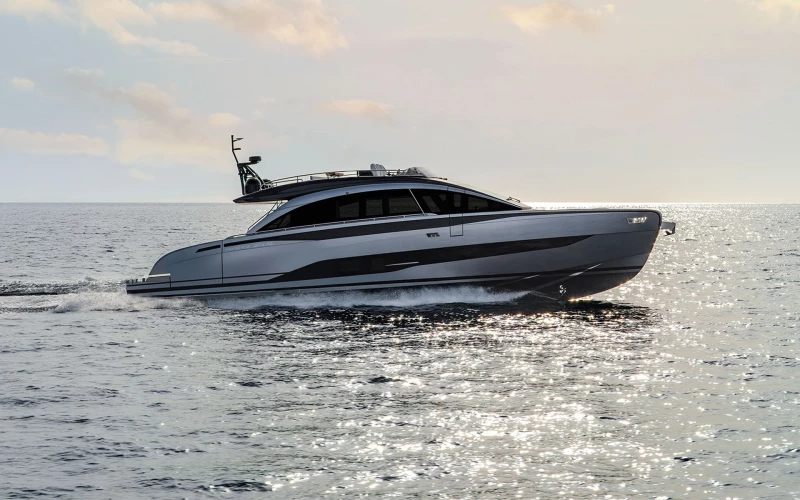
Behind the glamorous facade of Ferretti Group—the manufacturer of iconic luxury yachts like Riva, Wally, and Pershing—a fierce corporate war has just reached its boiling point. On May 14, 2026, the company's Annual General Meeting turned into a battlefield between two major shareholders: the Chinese state-owned Weichai Group and the Czech investment fund KKCG Maritime.
During the closed-door meeting, Weichai Group emerged victorious, securing 52.3% of the votes compared to KKCG's 47.4%. This victory allowed the Chinese conglomerate to claim eight of the nine board seats, effectively ousting long-time CEO Alberto Galassi, who had been instrumental in the company's financial turnaround. The board subsequently appointed Tan Ning as Chairman and former Duracell executive Stassi Anastassov as the new CEO.
However, the victory was marred by unprecedented corporate drama. Just hours before the crucial shareholder vote, Stefano Domenicali (CEO of Formula 1) and Piero Ferrari (Vice-Chairman of Ferrari) resigned from the board with immediate effect. In a scathing open letter, Ferrari expressed his frustration, stating that he could no longer associate his family's name and legacy with the company due to a lack of transparency and "arrogance" from the winning faction.Furthermore, the losing Czech fund, KKCG, formally petitioned the Italian government to investigate whether Weichai violated Italy's "Golden Power" national security laws regarding Ferretti's military defense division, FSD.
Will the Yachts Survive the War?
With the stock plummeting on the Euronext Milan exchange, industry insiders and yacht owners are asking a critical question: will this geopolitical and corporate chaos kill the Ferretti Group, ending the production of its legendary yachts?
Financially speaking, the company is far from sinking. The paradox of this corporate war is that it is being fought over an incredibly healthy, cash-rich business. Ferretti Group just reported net revenues of €1.23 billion for 2025, outperforming the broader market. More importantly, the shipyards are sitting on an enormous order backlog of €1.71 billion. This means that even if the boardroom remains paralyzed by government investigations, the shipyards have guaranteed work, and buyers will continue to receive their yachts for the next few years.
The real danger lies not in immediate bankruptcy, but in the long-term erosion of the brand's soul. Outgoing CEO Alberto Galassi recently warned that the Chinese ownership's conservative approach and "lack of industrial vision" was severely constraining decision-making and weighing negatively on the group. In the hyper-competitive luxury sector, a failure to innovate and take design risks can quickly make a brand obsolete. Furthermore, losing Piero Ferrari strips the company of a vital guarantor of its "Made in Italy" heritage.
The new Chinese-led management is acutely aware of this risk. In his first official statement following the boardroom takeover, newly appointed Chairman Tan Ning rushed to reassure the market. He declared that the new board represents "continuity, stability, and growth," specifically promising to maintain the manufacturing presence in Italy and preserve the long-term industrial vision of the brands.
Ultimately, the Ferretti Group will not stop building yachts tomorrow. However, the true cost of this corporate war will be measured over the next decade. If the new management fails to balance its conservative financial approach with the passionate, risk-taking design philosophy that Italian yachting is famous for, iconic brands like Riva and Pershing may slowly lose the magic that made them legendary in the first place.